

Gymnastics is a captivating and awe-inspiring sport that combines strength, flexibility, grace, and precision. With its roots tracing back to ancient Greece, where it was an integral part of physical education and competitions, gymnastics has evolved into a highly technical and artistic discipline. It showcases the incredible abilities of athletes as they perform jaw-dropping feats of athleticism, pushing the boundaries of what the human body can achieve.
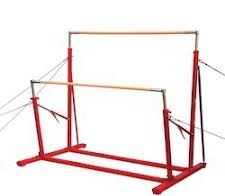
Gymnastics is divided into two main disciplines, artistic gymnastics and rhythmic gymnastics. Artistic gymnastics features both male and female athletes competing on apparatus such as the vault, uneven bars, balance beam, and floor exercise. Rhythmic gymnastics, exclusively performed by female athletes, combines elements of ballet, dance, and apparatus manipulation, such as the hoop, ball, clubs, and ribbon.
Gymnastics rules are set and maintained by the regulating authority named Fédération Internationale de Gymnastique (FIG) they also govern other aspects of the sport. In this sport, athletes perform their routine on a set of apparatus and complete the routine with an acrobat jump. The duration of each routine is about 60 – 90 seconds and depends upon the apparatus.
Gymnastics demands an exceptional level of strength, flexibility, and precision from its athletes. Gymnasts develop strong core muscles, upper body strength, and explosive power through countless hours of training. Flexibility is crucial, enabling them to execute intricate movements and maintain flawless body positions. The precision required in every routine is achieved through relentless practice, fine-tuning each element to perfection.
Men and women both participate in gymnastics under their respective categories. There are different apparatus for men and women and different gymnastics rules for each apparatus.
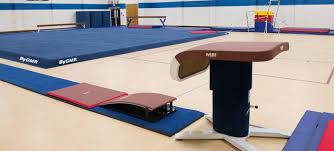
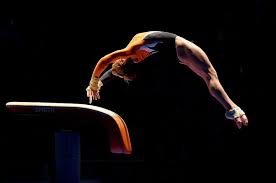
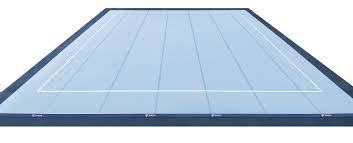
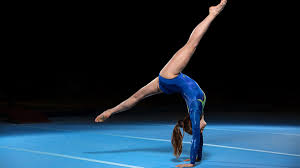
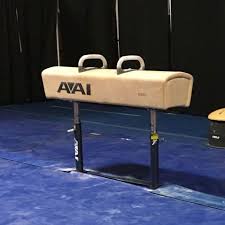
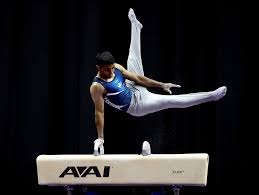
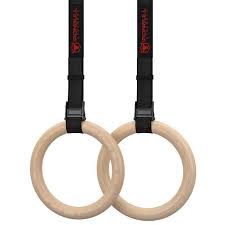
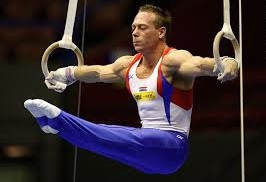
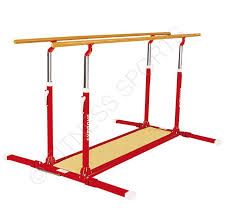
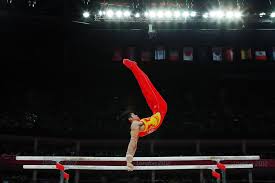
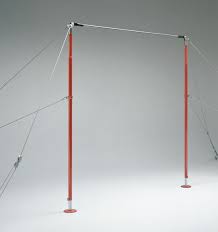
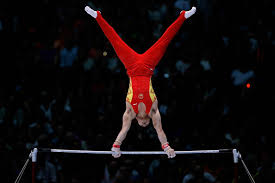
Apparatus for Men: Vault, Floor Exercise, Pommel horse, Rings, Parallel Bars, Horizontal bar
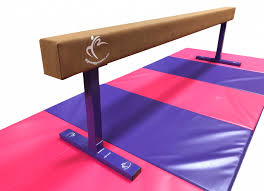
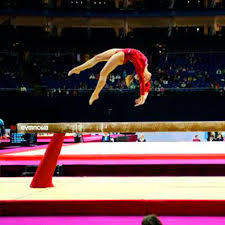
Apparatus for Women: Vault, Floor Exercise, Uneven bars, Beam balance
The Routine of both men and women gymnasts on an apparatus is judged upon the degree of difficulty, the skill of presentation, landing style, usage of apparatus and overall presentation. Points are deducted for any faults by the athletes.
There is an age limitation for senior gymnasts. Women must be of at least 16 years of age while men must be at least 18 years of age.
Artistic Gymnastics Olympic 2020 logo : 



- Radivilov Igor

- Frasca Loris

- Shin Jeahwan

- Simone Biles

- Jade Carey
- Ellie Downie

- Zapata Rayderley

- Yulo Carlos Edriel

- Dolgopyat Artem

- Simone Biles
- Sunisa Lee
- Angelina Melnikova

- Lee Chih Kai

- Weng Hao

- Kameyama Kohei

- Liu Yang
- You Hao
- Tulloch Courtney
- Poliashov Vladislav
- You Hao
- Arican Ferhat

- Zonderland Epke

- Miyachi Hidetaka
- Srbic Tin

- Nina Derwael

- Becky Downie
- Sunisa Lee
- Simone Biles
- Liu Tingting
- Li Shijia